 Excelrs
Chunking: a file becomes cards you can cite
Cut on headings. Title each piece. Keep rule and example together. Pencil first.
Sandeep Jaiswal·20 January 2025 · 5 min read
A file is too big to use as one blob. Chunking is how you cut it into pieces you can search, cite, and check.
This post is a desk method: how big, where to cut, and how to see a bad cut.
What a chunk is
A chunk is a heading plus a short passage. You should be able to read it out loud in under a minute.
If you cannot name the heading, the chunk is a scrap. If you need five minutes to read it, the chunk is still a file.
If you cannot hold the piece in your head, the index cannot either.
Where to cut
Cut on headings first. Then on paragraphs. Then, if a paragraph is huge, on sentences that start a new fact.
Do not cut in the middle of a table if you can help it. Keep a numbered list together.
Keep a little overlap: the last line of one chunk can start the next. That stops a sentence from dying on the border.
| Cut | Use |
|---|---|
| By heading | Default |
| By paragraph | When headings are rare |
| By token count only | Last resort — you will split a rule in half |
A token counter is a backstop, not a plan. The plan is meaning.
How big
Aim for a card, not a chapter.
Too small: one sentence. The search will match tone, not the rule.
Too big: three pages. The match will be “this is about college” and you will not know which line.
Three to eight chunks per question is enough at retrieve time. That is a separate step. First make chunks a person can check.
A first project
Take one page you wrote. Mark four cuts in pencil. Write a title on each piece.
Ask a question you know the answer to. Which piece should win? If two pieces both claim it, you cut in the wrong place. Merge them.
Ask a question that lives on the border of two pieces. If both miss it, add a line of overlap.
Ask a question the page cannot answer. Every piece will still exist. None of them should become the answer later. That is retrieve plus refuse, not chunking. Chunking only has to make the right piece findable.
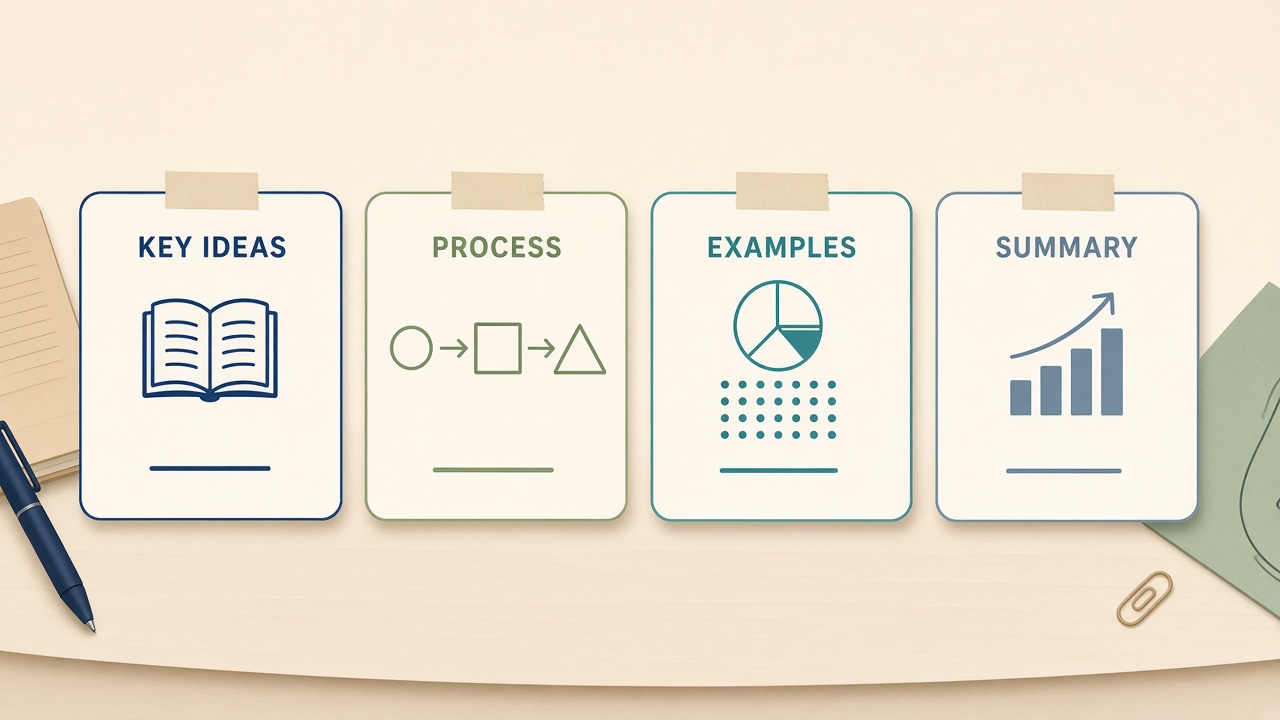
If you cannot label a card in five words, cut again or merge.
How a bad cut looks
The attendance rule is on card 1. The example (36 of 40) is on card 4, after the canteen. A question about “how many can I miss” matches the canteen, because both sit near “college day.”
Fix: keep rule and example on neighbouring cards, or one card.
Another miss: you split a table so header is on one card and numbers on the next. The numbers have no names. Keep the header with the numbers.
Walk through once
Print the page. Draw four boxes. Title them.
Read box 2 out loud. If you need box 1 to understand it, you cut too hard. Move one sentence up.
Do not use software yet. Pencil first. The software will only copy your cuts.
When the four titles make sense, then split the file in the tool you use. Keep the titles as metadata. You will need them for citations later.
What good looks like
A good set of chunks is boring to describe.
You can write four titles on a sticky note: Rule, Safe example, Unsafe example, Canteen. A classmate can pick the right sticky for “how many can I miss” without reading the file.
You can open any sticky and finish it in under a minute. You do not need the previous sticky to understand the sentence you are in, except for one overlap line.
When you retrieve, you get two or three stickies, not twelve. The extra ones are neighbours, not the whole handbook.
If you cannot do that on paper, a vector store will not save you. It will only hide the mess behind a score.
A second pass on the same page
After the first four cuts, ask three questions you did not use to design the cuts:
- A number question: “What is 75% of 40?”
- A neighbour question: “Is the canteen example about attendance?”
- A missing question: “When is the makeup class?”
Write which card should win, or that none should. Then search.
If the number question hits Canteen, your titles are too vague. Rename.
If the neighbour question hits Rule, you glued two topics. Split.
If the missing question hits a card with a date that is not there, you did not chunk wrong — you will need a refuse later. Note it. Do not “fix” chunking by stuffing a fake date into a card.
This second pass is how you stop designing chunks for the one demo question.
Common mistakes
One chunk per file. You did not chunk.
Fixed length, ignore headings. You will cut a rule in half.
No titles. You cannot cite, and you cannot debug.
A hundred tiny sentences. Search becomes a mood.
Throwing away the source page. You need it when you open the cite.
Practise
- One page, four pencil cuts, four titles.
- A known question. Name the winning card before you search.
- A border question. Add overlap if both miss.
- Only then split in software.
- Keep the titles.
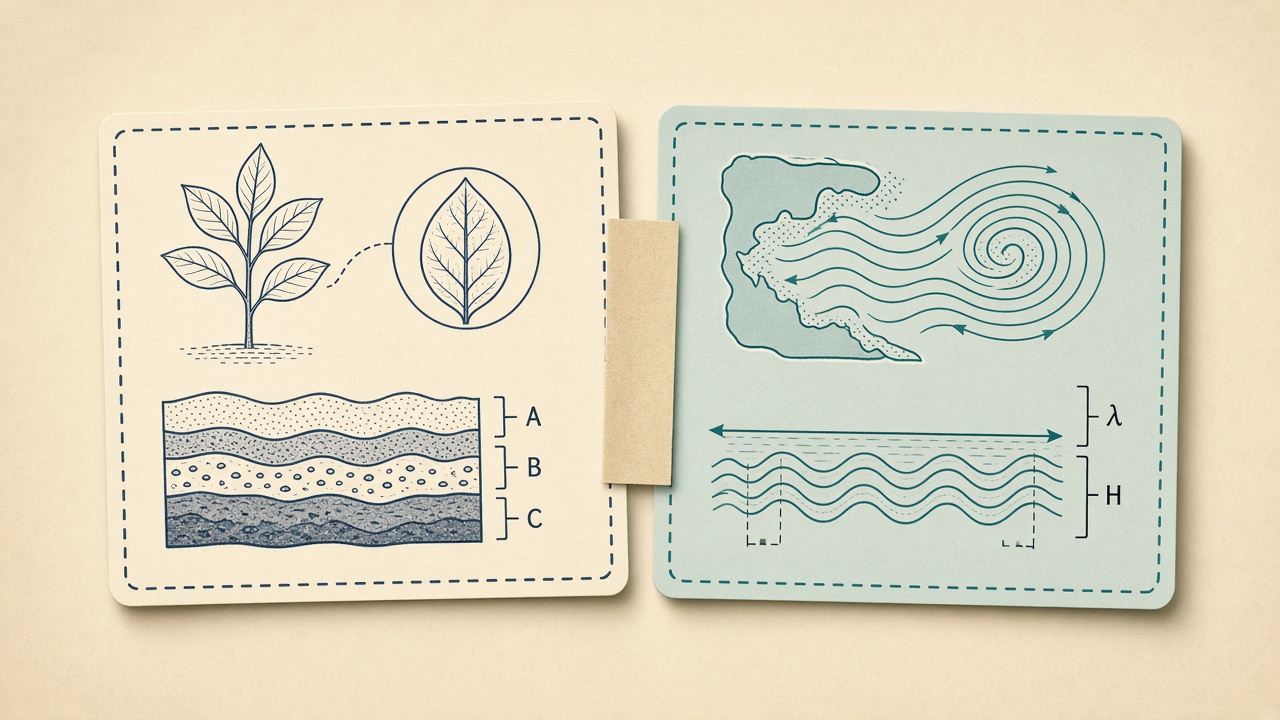
The overlap is a thin strip, not a second copy of the page.
Checklist
- Each chunk has a title you can say out loud.
- You can read a chunk in under a minute.
- Rule and its example sit near each other.
- Tables keep their headers.
- You cut on paper before you cut in code.
The next step is four titled cards, not a smarter splitter.